
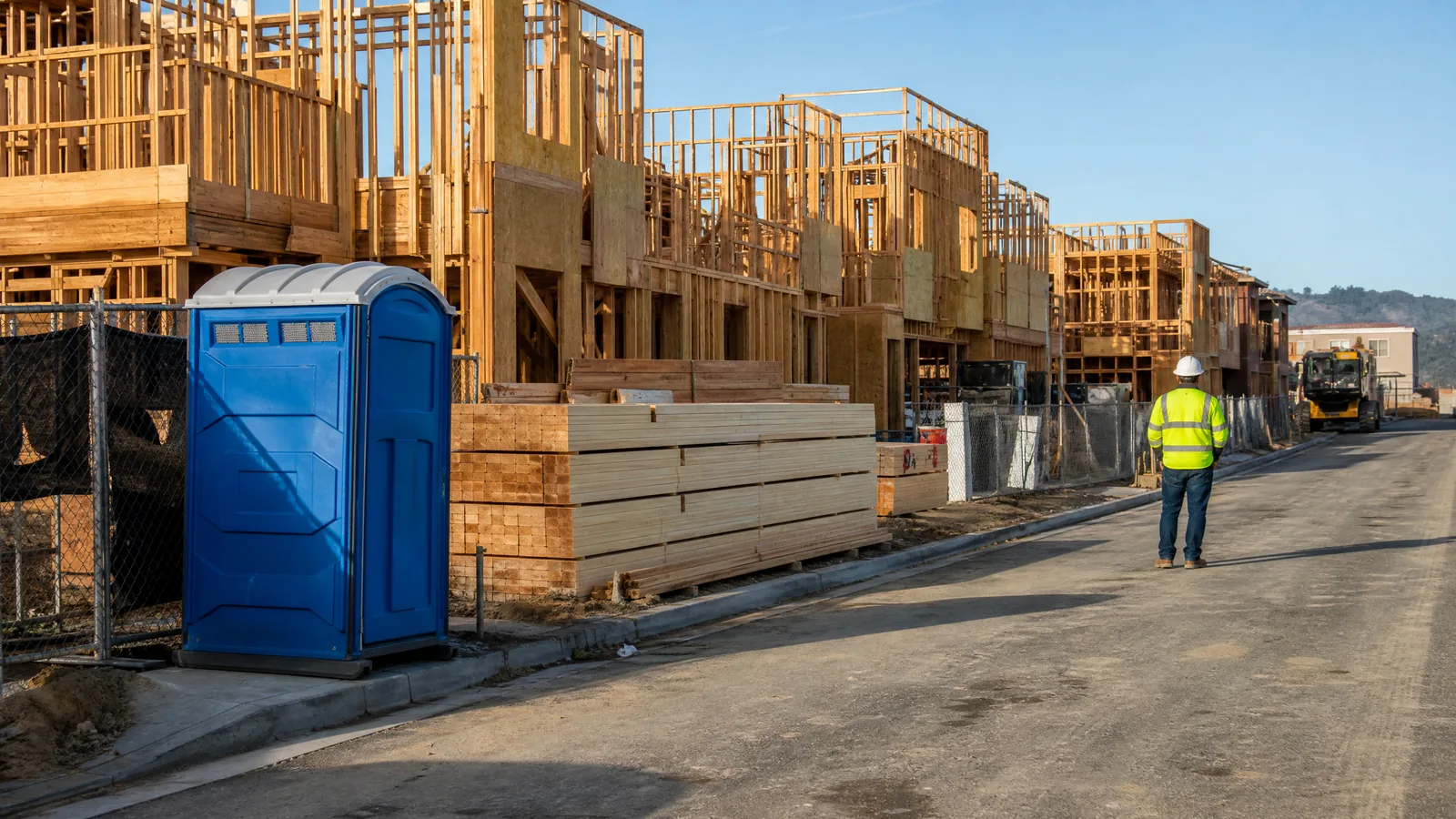
Construction Portable Toilet Rentals in Glendale
Construction sanitation has to work while the site changes around it. Crews need a convenient, respectful option that does not compete with equipment, deliveries, staging, or emergency access. A useful plan begins with the project sequence rather than a fixed point on a drawing.
Choose a service corner that can stay reachable
Look for a firm area outside the busiest equipment path, close enough for workers to use without leaving the site, and accessible to the service approach. Identify gates, narrow drives, low branches, overhead wires, steep grades, soft soil, and temporary barriers. If the site will be fenced, make sure the planned location remains inside an access plan that can be maintained.
Account for the project phase
The best location during demolition may differ from the best location during framing or finish work. Tell the coordinator what will happen near the proposed placement and whether the entrance, driveway, or staging area is expected to move. A written site sketch can help prevent last-minute confusion when subcontractors or deliveries arrive.
Estimate use honestly
Share the approximate crew size, work hours, project length, and whether several trades will share the unit. Avoid basing the plan on the smallest expected crew if the site will have peak days. If the job includes a public-facing renovation or occupied property, consider how workers, residents, and visitors will move around the sanitation area.
Keep sanitation separate from hazards
Do not place a unit beside excavation edges, chemical storage, hot work, active loading, or blocked egress. The route should remain reasonably level and free of debris. A construction manager should coordinate the final location with the project’s own safety plan and site rules.
FAQs
Can the location change during construction? It may need to, depending on the site and arrangement. Identify likely phase changes early and ask how a move would be handled; do not assume a unit can be relocated without coordination.
What site details matter most? Crew count, duration, gate width, surface, grade, overhead clearance, equipment routes, fencing, and a safe service approach are the most useful starting details.