
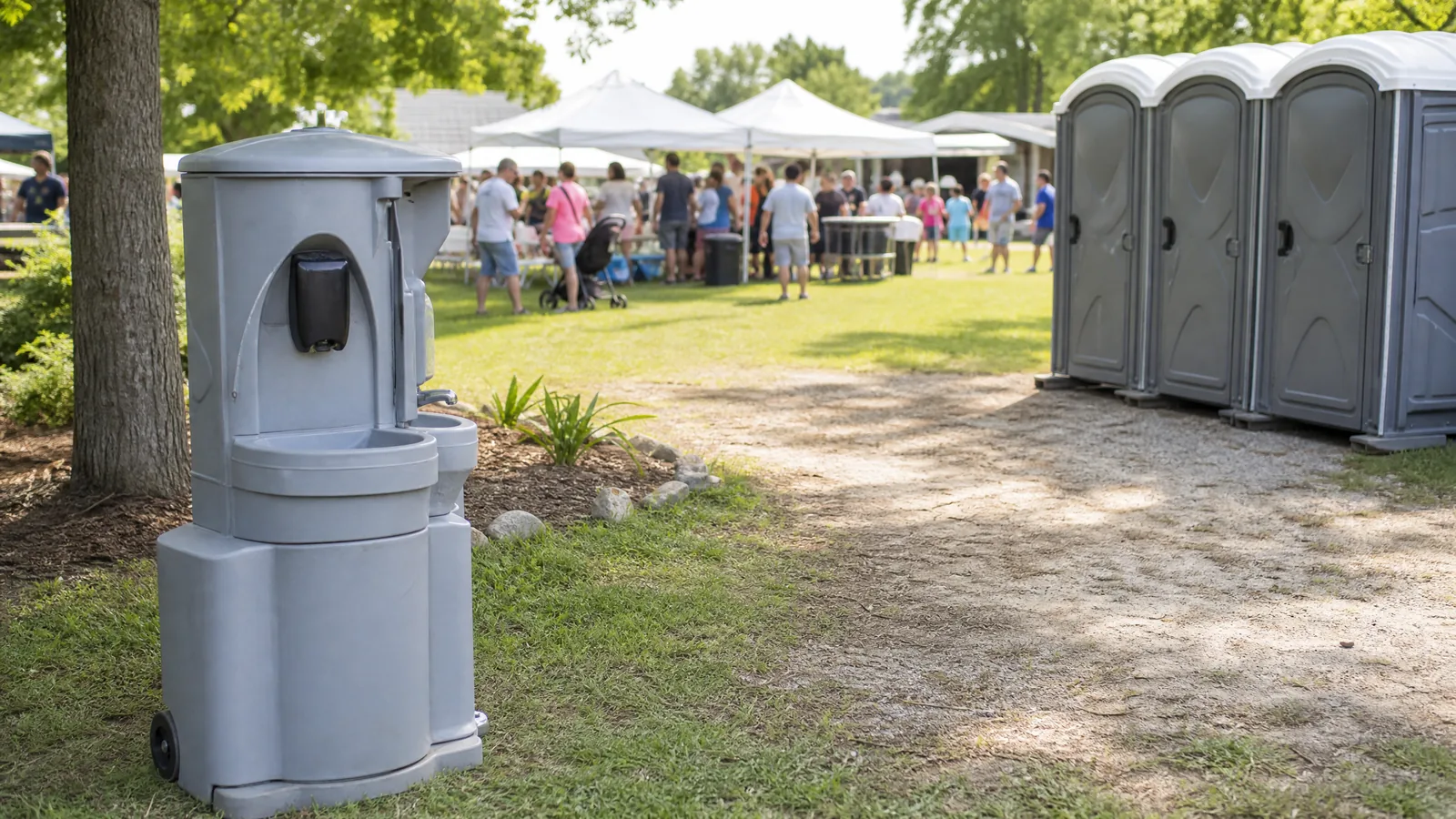
Handwashing Stations in Glendale
A portable toilet setup works better when people can immediately see where to wash their hands. Handwashing stations are especially useful at outdoor events, near food and beverage service, around high-traffic entrances, and on jobsites where workers need a convenient hygiene point. Treat them as part of the layout, not as a last-minute accessory.
Place stations where behavior happens
A station near the restroom area supports the most direct handwashing moment. A second location may make sense near food service or a separate activity zone when guests do not naturally pass back through the restroom area. Keep the station visible, reachable, and outside queues or narrow doorways.
Think about service and replenishment access
The site plan should leave room for the station itself and for whatever access is needed to service or replenish it. Do not tuck it behind décor, a parked vehicle, a locked gate, or a temporary wall. Share the event hours, food setup, gate details, and surface conditions when discussing placement.
Make hygiene part of the guest message
Use a simple sign or wayfinding cue that tells guests where to wash. Keep the area free of cords, boxes, and discarded packaging. On a construction site, place the station where workers can use it without crossing a hazardous route. On an event site, coordinate it with the guest-flow plan.
FAQs
Where should a handwashing station go at a food event? Put it where guests can reach it before or after eating without crossing food-preparation space, blocking a queue, or creating a bottleneck. The best position depends on the event’s actual circulation map.
Do handwashing stations replace portable toilets? No. They complement sanitation facilities by giving users a clear place to clean their hands, particularly near food and high-traffic areas.